
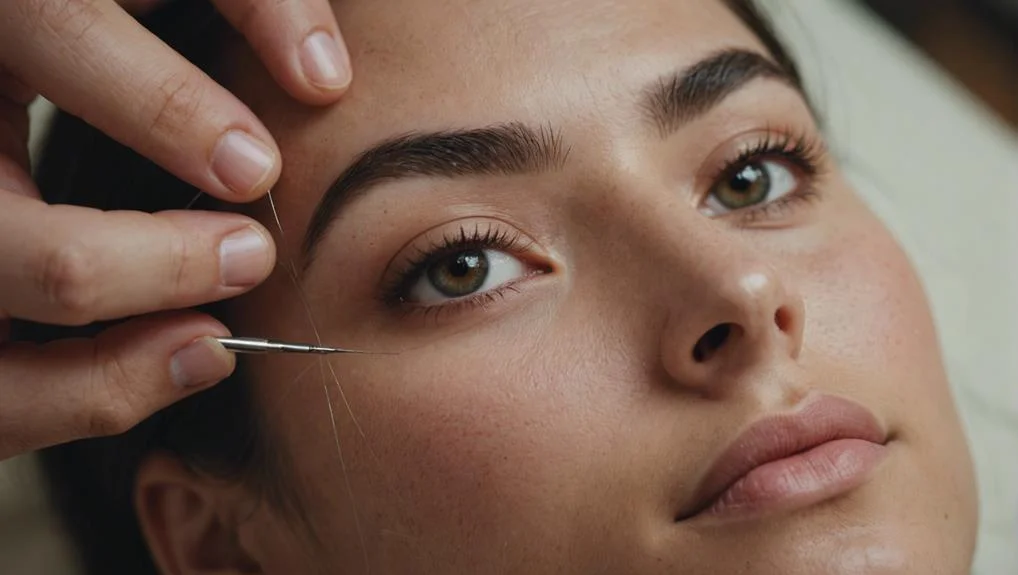
Brow threading produces varying pain levels that most clients rate between 3-7 on a 10-point scale, with specific tips helping minimize discomfort throughout the experience. Knowing how to prepare, what to expect, and how it feels helps first-timers feel more at ease with threading. Threading pain intensity varies significantly between different eyebrow areas, with upper brow regions typically scoring 6-7 on pain scales while under-brow sections register closer to 3-4 ratings. brow threading fountain gate generally follows a pattern where certain regions cause more sensation than others. The overall experience combines brief high-intensity moments with longer periods of minimal discomfort as technicians work systematically through each brow section.
Specific pain level ratings
Upper eyebrow threading consistently rates 6-7 out of 10 on standard pain scales due to thick hair concentration and sensitive nerve endings along the brow bone. As hair density decreases, the arch area typically scores 5-6, but follicle resistance remains high from varied growth directions. Under-brow regions usually rate 3-4 since hair grows finer and skin sensitivity decreases in these areas. Individual pain thresholds create 1-2 point variations on these baseline ratings, with some clients experiencing minimal discomfort while others find the same areas more challenging. Hormonal fluctuations during menstrual cycles can increase pain ratings by 1-2 points across all regions, making scheduling considerations important for pain-sensitive individuals.
Essential pain management tips
- Apply numbing cream containing 4% lidocaine to eyebrows 20 minutes before the appointment for maximum pain reduction without interfering with hair removal effectiveness.
- Take 400mg ibuprofen exactly 45 minutes before threading for optimal anti-inflammatory effects during treatment.
- Use deep breathing techniques with 4-second inhales and 6-second exhales during threading to activate natural pain-reducing responses.
- Request ice application between eyebrows to reset nerve sensitivity and provide brief recovery periods during longer sessions.
- Ask technicians to work quickly through dense areas rather than hesitating, as swift movements cause less cumulative discomfort than prolonged, tentative pulling.
- Schedule appointments when stress levels are lowest since anxiety amplifies pain perception by 20-30% compared to relaxed states.
Session timeline expectations
Expect initial sharp pain during the first 2-3 thread pulls as nerve endings react to unfamiliar sensations before gradually adapting to the process. The first eyebrow typically feels more intense than the second due to anticipation, anxiety, and muscle tension that naturally decrease once threading begins. Most sessions involve 8-12 separate threading passes per eyebrow, with each pass lasting 2-4 seconds of active discomfort. Plan for a 10-15 minute total appointment duration, though actual pain occurs during only 3-4 minutes of cumulative threading time. Expect mild tenderness for 15-30 minutes post-session as circulation returns to normal and any temporary swelling subsides completely.
Physical sensation details
Threading creates sharp, pinching sensations like multiple tweezers working simultaneously across small skin areas. The thread produces a distinctive pulling feeling as it catches hair shafts and extracts them rapidly from follicles in coordinated motions. Upper brow areas generate deeper pulling sensations due to stronger hair root attachment and increased follicle depth in these regions. Some clients experience brief burning or stinging immediately after each threading pass, followed by warm tingling that indicates increased blood flow to the treated area. The skin may feel tight or slightly swollen immediately after completion, similar to post-exercise muscle sensations that resolve naturally within 20-30 minutes. Combining brief high-intensity moments with effective preparation techniques makes threading accessible for most pain tolerance levels while delivering precise eyebrow shaping results.
